A Hunan key enterprise for Africa trade · 80 of 118 staff hired locally in Africa
Call us: +86 731 8876 6661
中文 / English
The China-Africa Agricultural Science and Technology Cooperation Parallel Session of the 2024 World Agricultural Science and Technology Innovation Conference was recently held in Pinggu, Beijing. Several academicians and experts in agriculture joined African agricultural experts to discuss strengthening China-Africa agricultural cooperation and addressing the global food crisis.
China-Africa Agricultural Science and Technology Cooperation Parallel Session. Photo courtesy of China Agricultural University
Sun Qixin, President of China Agricultural University and academician of the Chinese Academy of Engineering, said that in the face of global challenges such as climate change and food security, China-Africa agricultural cooperation has broad prospects and huge potential. He called for the international community to jointly address global climate change and food security challenges.
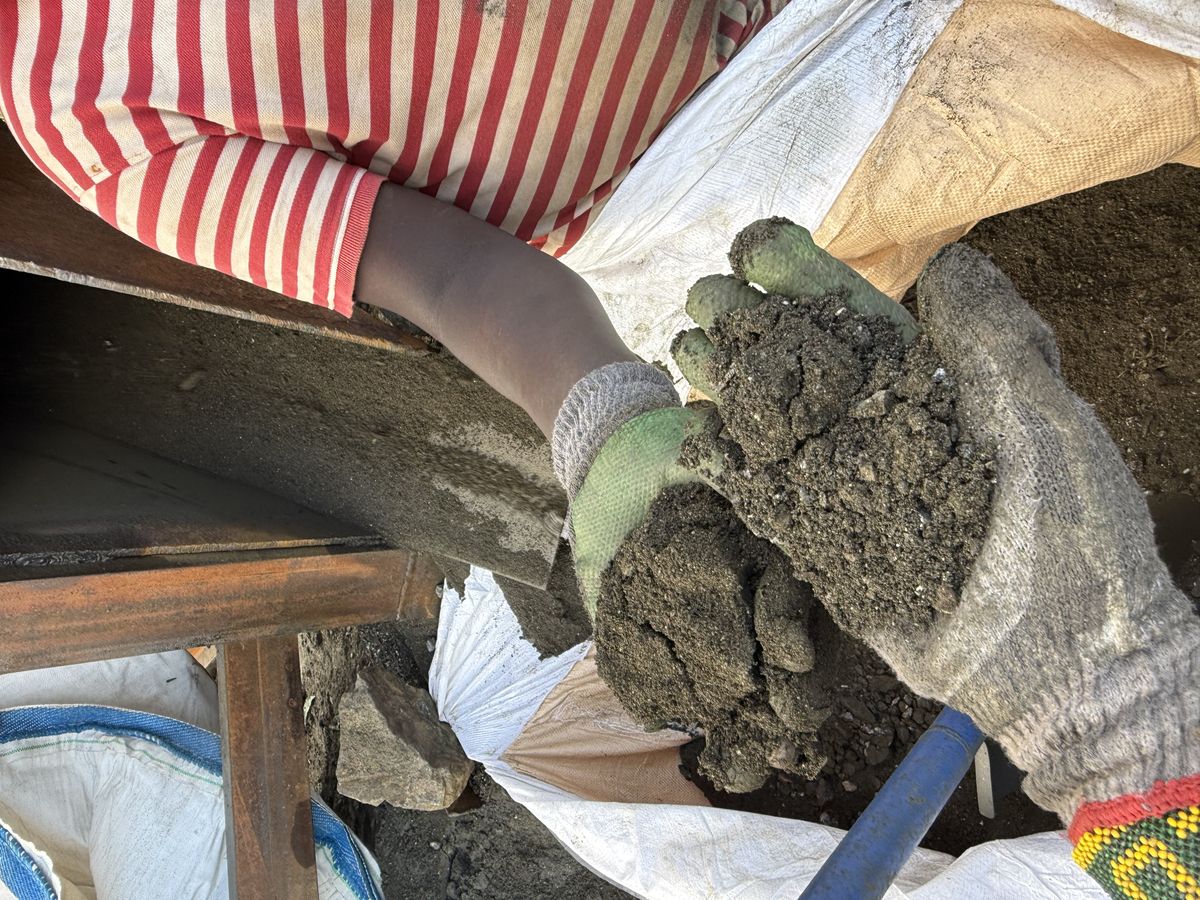
Li Xiaoyun, a professor at China Agricultural University and honorary dean of the Institute of International Development and Global Agriculture, and his team of teachers and students have carried out agricultural cooperation projects in Africa for many years. They helped introduce low-cost maize processing equipment to local communities in Africa at a cost of only 1-2 yuan, significantly improving processing efficiency; promoted soybean intercropping technology, which both raises yields and improves soil health while solving the problem of farmers lacking funds to buy fertilizer; and introduced soy milk processing technology to enrich local residents' sources of nutrition. Li Xiaoyun said that these seemingly simple technological innovations have in fact driven the integrated development of agricultural production, soil health and human nutrition. He said that solving Africa's agricultural problems requires starting from simple concepts and from actual needs, promoting appropriate technologies suited to local conditions rather than blindly pursuing large-scale modern equipment.
The CGIAR Regional Director for Africa said that China's experience in agricultural technology, biotechnology and policy innovation is of great reference significance for Africa's agricultural development. China and Africa face common challenges in responding to population growth, climate change and sustainable agricultural practices, which provides broad space for innovative cooperation between the two sides. To this end, he called for prioritizing joint research projects focusing on climate resilience, food security and sustainable development.
The former President of Wageningen University & Research in the Netherlands said that the African continent still faces severe challenges in food security and that proactive action is needed in agricultural modernization, the blue economy, and education, science and technology innovation. He believes that international cooperation is crucial to solving Africa's food security problems and called for stronger exchanges and cooperation in the agri-food field at the bilateral, multilateral and global levels.

The CGIAR Regional Director for West and Central Africa and Director General of the Africa Rice Center said that Africa currently produces about 22 million tonnes of rice a year while consuming 37 million tonnes, a shortfall of about 15 million tonnes annually. Rice consumption on the continent is growing rapidly, but production is insufficient to meet demand. He called for stronger China-Africa cooperation to jointly promote the sustainable development of Africa's rice industry, and said that policy support and infrastructure development are crucial to advancing the industry.
In recent years, with the advancement of China-Africa cooperation, China-Africa agricultural science and technology cooperation has also deepened. Fan Shenggen, Chair Professor at China Agricultural University and Dean of the Academy of Global Food Economics and Policy, believes that future China-Africa cooperation should continue to expand and that the scale of funding needs to increase, especially in technology transfer. In addition, cooperation should not be limited to crop breeding but should also include livestock, fisheries and other fields, as well as policy strategy and institution building. Fan Shenggen said, “China-Africa agricultural cooperation should continue to deepen dialogue, share information, data and knowledge, jointly improve the living standards of smallholder farmers, improve consumers' nutrition and health, and address challenges such as climate change.” (Source: The Beijing News)
© 金昂控股集团 · 转载请注明来源 https://www.jinanggroup.com/en/news/bV6ae2kb.html