A Hunan key enterprise for Africa trade · 80 of 118 staff hired locally in Africa
Call us: +86 731 8876 6661
中文 / English
Ke Xiangjin and Jin'ang Holding Group's entrepreneurial story of the “two platforms going global”
In the eyes of many, Africa is distant, unfamiliar, a continent woven with high risk and uncertainty. But in Ke Xiangjin's eyes, Africa is not a “faraway place” but a land waiting to be cultivated and connected; not a speculative adventure, but an industrial path that someone must walk first.
Starting from the foot of the mines in Daye, Hubei, to setting up operations in Changsha, Hunan, and then to continuous expansion in Mozambique, Tanzania and other African countries, Ke Xiangjin, Chairman of Jin'ang Holding Group, has led his team step by step to blaze a new path for Chinese private enterprises to take resources global, between the ore veins and the ocean, between China and Africa.
That road has not been an easy one.
But it is precisely because it is difficult that it appears more resolute; because it is distant that it tests ideals more; because the uncharted territory is vast that pathfinders are needed all the more.
And Ke Xiangjin is exactly such a pathfinder.
In 1976, Ke Xiangjin was born in Daye, Hubei.
Daye has prospered because of mining since ancient times. There are ore veins buried deep underground, and also the sweat and faith left by generations of miners. For many, a mine may be nothing more than a livelihood; but for Ke Xiangjin, who grew up in a mining environment, the mine is a natural emotional connection and an indelible spiritual undertone.
He has had a special feeling for mines since childhood. Ore, tunnels, the roar of machinery, and the dust and resilience of miners formed his deepest memories of boyhood.
As the third child in the family, he always had a stubborn streak that refused to admit defeat. He secretly resolved that one day he would become the “eldest” in the family and carve out a world of his own.
His ambition was not merely to “live well” but to “accomplish something”.
He takes Liu Bang as a role model, admiring the vision and courage of rising from the grassroots and building momentum amid chaos; he takes Mao Zedong as his spiritual guide, esteeming strategic vision, lofty aspirations and the enterprising spirit of “daring to teach the sun and moon to shine in a new sky”. He hopes his life will not merely go with the flow, but that he can open up territory in the great tide of the times and truly build a career with scope, value and influence.
This spiritual undertone made him a person who dares to break the deadlock.
In his heart there has always been a deep conviction: to build a truly public company with real scope, a real system and real capital-market capability. This conviction is not vanity, but a sense of purpose.
Because in his view, when an enterprise reaches a certain scale, it is not just commercial success; it means the comprehensive establishment of organizational capability, social value and industrial influence.
2019 was an important turning point in Ke Xiangjin's life.
At the time, he had just completed a major turn in his career — leaving the traditional real estate industry he had cultivated for many years and resolutely switching to the track of overseas mining development. It was not an easy choice.
On one side was the familiar domestic track, with experience, foundations and a clear path; on the other was Africa, thousands of miles away, with a different language, different culture, different policies, a complex environment and unknown risks.
Many people did not understand. But Ke Xiangjin saw it very clearly.
He realized that in the context of the restructuring of global industrial chains, the meaning of resources had fundamentally changed. Key minerals such as lithium, nickel, copper and gold are no longer ordinary commodities, but important supports for new energy, new materials, high-end manufacturing and even national industrial security.
Whoever lays out resources earlier is more likely to hold the initiative in future industrial competition. And Africa is precisely an important concentration of the world's key mineral resources and an unavoidable coordinate for Chinese enterprises participating in global resource allocation.
When others saw risk, he also saw the trend;
When others hesitated and watched, he had already begun to plan his moves.
In that very year, a seed about “mining going global, resources serving the country” truly broke through the soil in his heart.
Once an ideal lands, it is no longer a slogan but hard, head-on reality.
How do you judge an ore vein?
How do you identify the type of mineral?
How do you evaluate a project?
How do you acquire mining rights?
How do you establish relations with the local government?
How do you build a localized team?
And how do you handle cross-border logistics, trade settlement and risk control?
Every question is a threshold.
Every threshold crossed represents real money invested, a rebuilding of one's knowledge structure, a continuous breakthrough of cognitive boundaries, and a contest of psychological endurance.
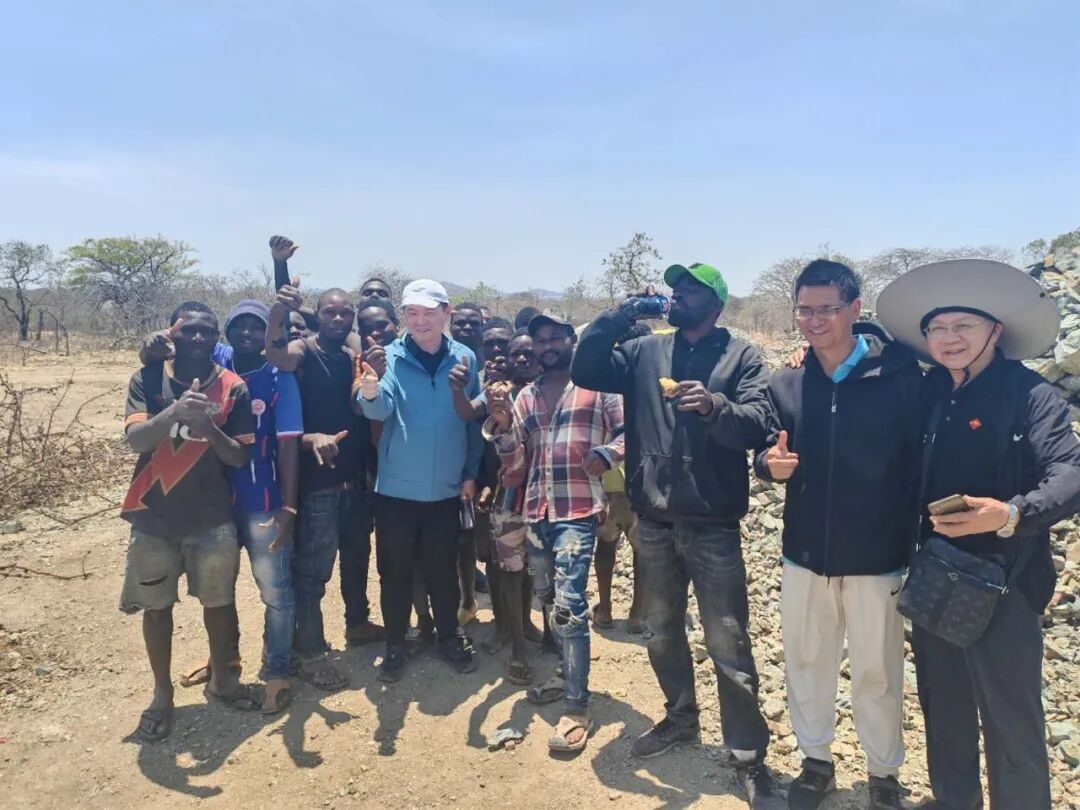
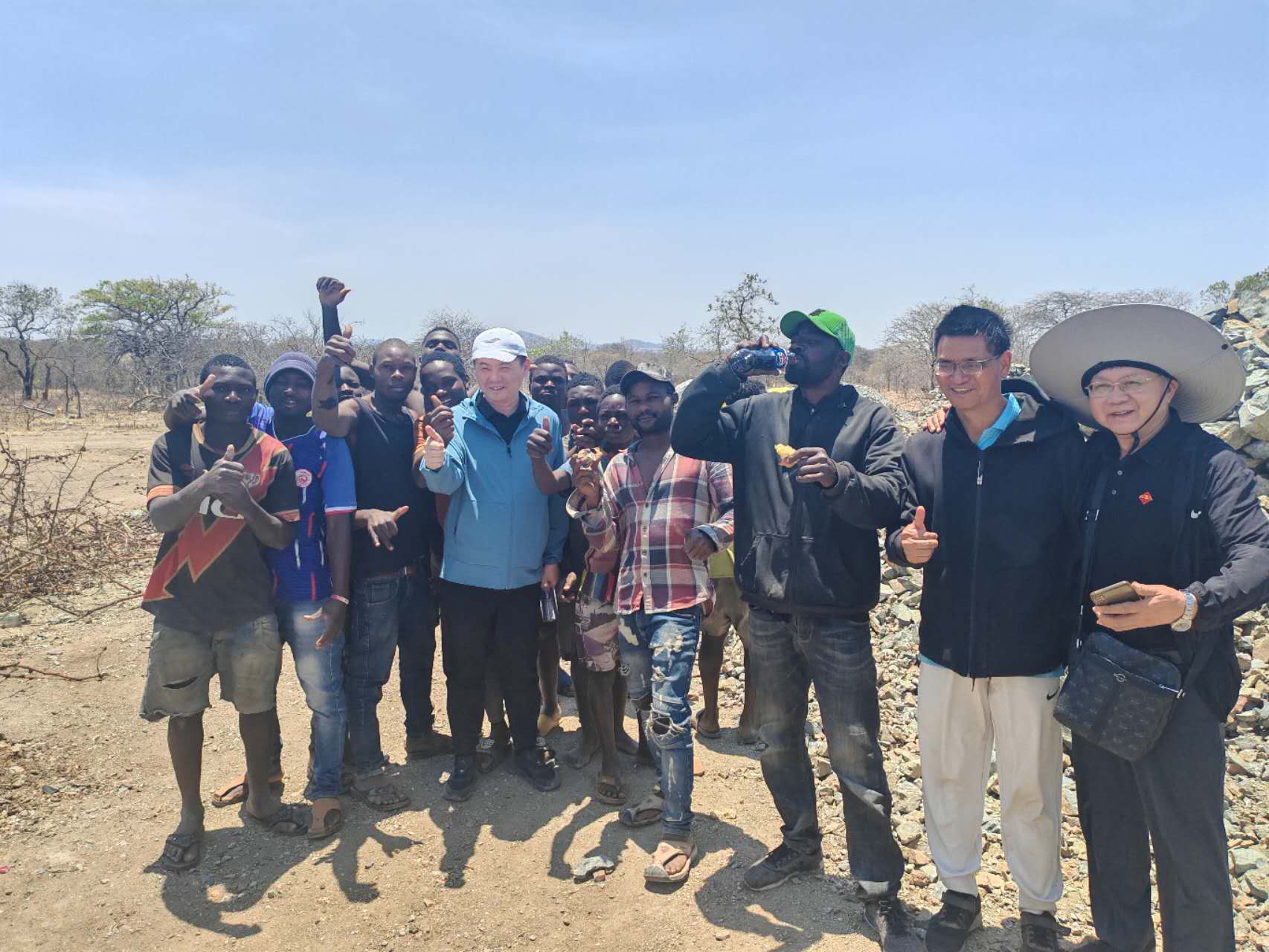
Starting in 2019, Ke Xiangjin led his team through mining areas in many African countries. They went deep into mountains, mine tunnels and open fields, and shuttled between cities, ports and construction sites. During the day, they followed veteran miners to look at rock strata, identify ore veins and explore tunnels, with gravel underfoot and mineral dust on their hands; at night, back at their lodgings, he pored over materials under the lamp, studied mining books, sorted through policies and regulations, taking notes page by page and filling notebook after notebook with insights.
Doubts from the outside world persisted.
“Africa is so far away, you don't speak the language, the policies are complicated and the infrastructure is poor — what makes you think you can succeed?”
Faced with such voices, he did not argue much, but said only one thing quietly: it is precisely because the road is hard that it is left to those willing to walk it
He did not set out because the road looked easy,
But because he was certain the direction was right, he was willing to walk a hard road through.
For resource-based industries, information on paper is never enough. True judgment lies underfoot, on site, in trip after trip of field surveys that seem repetitive but cannot be skipped.
Ke Xiangjin knows this well. In order to find mineral resources and projects truly worth deep cultivation, he led his team to Africa time and again, from cities to mining areas, investigating, comparing and verifying repeatedly.
Those were countless journeys of tens of thousands of kilometers. And the accumulation of more than a thousand on-site surveys. Africa is not a place that can be summed up simply.
There is infrastructure still to be improved, and there are breathtaking mineral endowments; every field survey tests patience; every round of negotiation tests wisdom; every decision tests courage;
Every action taken on the ground tests execution.
It is precisely under this methodology of “building judgment on the ground” that Jin'ang Holding gradually broke through.
After repeated research and systematic demonstration, in 2024 Jin'ang Holding successively achieved important resource layout results: a 172-square-kilometer polymetallic mining right in Zambezia Province, Mozambique; the early-stage land acquisition, household relocation, compensation and financial evaluation for the 12-square-kilometer China-Mozambique Mining Cooperation Demonstration Zone; a 2.6-square-kilometer nickel mining right in Tanzania; and gold mining at Chunya, Mbeya. These were the fruits of years of travel, learning, screening and judgment. After the projects landed, mining work advanced rapidly, and the first batch of high-grade nickel ore was successfully loaded and shipped to China. At that moment, it meant that Jin'ang Holding had moved from “seeking opportunities” to “mastering resources”, and from “strategic judgment” to “substantive delivery”.
And behind all this, what is best reflected is a kind of entrepreneurial wisdom in Ke Xiangjin: daring to think, but not indulging in fantasy; daring to venture, but not blindly; daring to bet, but on the basis of solid research and deep understanding.
But building a set of long-term effective industrial organizing capability
For many companies, securing mining rights can already be considered success.
But in Ke Xiangjin's view, that is far from enough. Because the questions he thinks about have never been limited to the immediate. What concerns him more is: with only mining rights, can sustained competitiveness be formed? With only a single project, can the long-term development of an enterprise be supported? With only one company fighting alone, can it truly ride out global market cycles?
The answer is obviously no. Ke Xiangjin clearly sees that today's mining competition is no longer simply about “who holds resources”.
What truly determines the future is whether resources can be integrated, the industry chain connected, upstream and downstream linked, and more participants organized to form an ecosystem, a platform and systematic capability.
Mining has never been an isolated industry. Behind it lie exploration, extraction, transport, trade, smelting, processing, equipment, finance, talent, services and localized operations, among many other links. If these links are fragmented, projects tend to be heavy, slow, expensive and scattered. But if platform-based synergy can be formed, efficiency can be greatly improved, thresholds lowered and resilience strengthened. So Ke Xiangjin began to push Jin'ang Holding's strategic upgrade — from “doing projects” to “building platforms”; from “doing it ourselves” to “doing it together with everyone”. This is his brilliance. Many people start businesses by continuously making things bigger.
A higher level of entrepreneurship is to turn things into a system in which others can also participate and win together.
Around this idea, Jin'ang Holding gradually formed its “two platforms” strategy for going into Africa:
First, the “Kuangduoduo” digital-intelligent platform;
Second, the “joint mining” platform.
This marks that Jin'ang Holding's role is gradually upgrading from project developer to resource organizer, industry connector and ecosystem builder.
“Kuangduoduo”: reconstructing mining information and resource efficiency with platform capability
The emergence of “Kuangduoduo” stems from Ke Xiangjin's long-term observation of industry pain points. Ke Xiangjin realized that future competition in mining would be not only about resources, but also about information efficiency, matching efficiency and organizational efficiency. Whoever can reconnect scattered information, resources, demand and service capabilities will have a better chance of occupying a higher-value position in the industry chain.
Therefore, “Kuangduoduo” is not a simple information publishing platform, but a digital-intelligent linking platform built around overseas mining development. Its goal is to systematically integrate and precisely match mining rights information, project resources, upstream and downstream demand, service capabilities and cooperation opportunities through platform-based means, establishing a clearer and more efficient entry point for enterprises going global.
If “Kuangduoduo” solves the problem of connection, then “joint mining” addresses the problem of organization.
Ke Xiangjin sees that many Chinese enterprises today do not lack strength, nor do they lack the desire to go global; what they lack is a trustworthy organizer and a relatively feasible path.
Going global alone means high financial pressure, high project thresholds, high trial-and-error costs and high uncertainty. Many small and medium-sized mining companies, equipment companies, technical teams and even individual investors are willing to participate in overseas mining development, but because they lack access to mining rights, local resources and systematic safeguards, they ultimately can only stand by and watch.
So Ke Xiangjin proposed the idea of a “joint mining” platform: integrating mining rights, equipment, technology, capital, talent, channels and local operating capabilities through a platform to form a cooperation system that shares opportunities, shares risks and jointly builds value.
This is a new model that better fits the characteristics of Chinese enterprises going global today.
It lowers the threshold for small and medium-sized players to participate in overseas mining development and improves the efficiency of resource allocation. More importantly, it upgrades “one enterprise going global” into “an entire industrial group going global together”.
A truly vital undertaking is not about one person running fast, but about a group of people going far.
This sentence is both his understanding and his magnanimity.
Because only by being willing to share opportunities can more strength be gathered;
Because only by not thinking solely about one's own results can one truly become the organizer of a track.
In many people's understanding of “going global”, enterprises seem to simply bring resources back and sell goods abroad. But Ke Xiangjin does not see it that way.
In his view, truly successful going global is not simply taking things away, but taking root locally, growing together with local partners and developing together with the host country.
So what Jin'ang Holding is advancing in Africa is not just the projects themselves.
More importantly, it strives to turn projects into development results that local people can see and touch — job opportunities, tax contributions, industrial synergy, capacity training and joint platform building.
Viewed against the larger backdrop of the times, what Ke Xiangjin is doing is not only the commercial layout of one enterprise, but to some extent also a concrete practice of Chinese private enterprises participating in global resource allocation and serving China's industrial upgrading.
And this is precisely the true weight behind his mission of “building the enterprise on mining and serving the country with resources”. He said: “Resources are the food of industry, and security is the bottom line of development. Jin'ang Holding is willing to be a resource sentinel of the new era, to hold up the banner of serving the country with the backbone of mining, to link the future of China-Africa industry through the 'Kuangduoduo' platform, to carve Hunan's coordinates into the global resource map, and to let the light of China shine over the land of Africa.”
If a deeper cultural thread is used to understand Ke Xiangjin, what is most distinctive about him is precisely the convergence and fusion of the “Huxiang and E spirit”. It is “worrying about the world, daring to be first, applying knowledge to practical affairs, and never giving up”. The land of Hunan has always nurtured people with a sense of home and country, the courage to reform and strategic vision. Ke Xiangjin based his headquarters in Changsha not only because of its location and policies, but because it is deeply in tune with Hunan's overall cooperation with Africa. His layout here is not accidental, but a comprehensive judgment based on trends, policies, platforms, resources and the future.
If the “E spirit” gave him the resilience to take root downward, then the “Huxiang spirit” endowed him with the breadth of mind and vision to open up outward. He has the “toughness” of Hubei people and the “daring” of Hunan people; the practical approach of a miner's son and the farsightedness of Huxiang culture; the patience of “advancing one step a day” and the vision of “climbing high to see far”.
It can be said that his entrepreneurial story is itself a vivid portrayal of the “Huxiang and E spirit” in a private entrepreneur of the new era:
He has the resilience of climbing up step by step from the bottom, so he does not easily give up in the face of difficulties;
He has the ability to keep learning and to rebuild from zero, so he can start anew in a completely unfamiliar country;
He has the ability to assess trends and make strategic judgments, so he can leap from project thinking to platform thinking;
He also has the awareness to organize all parties and unite partners, so he is not satisfied with his own success but hopes to bring more people to participate together.
From Changsha to Africa, what he wants to achieve is not just an enterprise
In January 2024, Hunan Jin'ang Overseas Investment Co., Ltd. and Hunan Jin'ang Mining Technology Co., Ltd. were established in Changsha;
In June 2025, the company was officially renamed Jin'ang Holding Group;
This change of name is not just an upgrade of the corporate name, but symbolizes that an entrepreneurial vision has begun to enter a larger pattern.
From the first trips to Africa for research to obtaining core mining rights; from mining project development to the shaping of the “two platforms going global” strategy; from individual judgment to the building of organizational capability; from single-point breakthroughs to ecosystem co-building — Ke Xiangjin and Jin'ang Holding are gradually forming a more representative path for Chinese private enterprises going global, driving more Chinese enterprises to go global together and jointly participate in global resource development.
This path itself has strong significance for the times.
He believes that though the dream is distant, it can be reached by pursuit; though the aspiration is hard, it can be fulfilled by perseverance. So he sets out time and again, crosses uncertainty time and again, and turns what others see as “difficult” into the “road” beneath his own feet.
Today, under the forward-looking strategizing of founder and chairman Ke Xiangjin, Jin'ang Holding, with decisions one step ahead of others, is developing vigorously on this hot land of Africa full of opportunities. Ke Xiangjin's strategic positioning for mining going global today is full of profound insight. He always stands on broad coordinates of time and space, observing the “timing” and “trend” of today's market, and makes judgments and decisions from a long-term and overall perspective. Keywords such as “development”, “going global”, “linkage” and “co-building” are not buzzwords in his business map, but practice logic that has been verified step by step. Yet when the seas are turbulent, a true enterprise must become the mainstay.
Whether the Jin'ang brand can become world-renowned in the future will ultimately depend on strength.
And strength is not just about how many mines and projects one has, but whether one can continuously demonstrate confidence and responsibility to the market, and whether one can establish a truly own position in the global resource map.
The most moving part of his story is not entrepreneurship itself, but the courage to keep moving forward amid uncertainty, the resolve to adhere to long-termism in hardship, and the magnanimity to want to organize more people to go further together beyond personal success.
What is written today is the entrepreneurial journey of an entrepreneur, and also the answer of a Chinese private entrepreneur from deep within the times:
Only by taking root downward can one grow upward;
Only by moving toward the sea can one connect with the world.
© 金昂控股集团 · 转载请注明来源 https://www.jinanggroup.com/en/news/bV6xxEKb.html